
When you start to work on a book or article, things that seemed straightforward can rapidly become surprisingly complex. I am currently working on the third title in the Fleet Air Arm Legends series from Tempest Books, on the Fairey Fulmar fighter and have run into one of these relating to the switchover from Mk I to Mk II. When exactly was it? And which aircraft was the first Mk II? I thought these struggles might make an interesting – or possibly infuriating – blogpost.
To backtrack slightly, the Fairey Fulmar was a two-seat fighter operated by the Royal Navy’s Fleet Air Arm during the Second World War. It was a large and somewhat cumbersome aircraft for a fighter, as it was developed from a design for a light bomber, but it nevertheless became the top-scoring fighter in FAA service. The initial production variant was the Mk I, superseded by the Mk II in 1941. The main difference between the two was the engine – the Mk I was powered by a Rolls-Royce Merlin VIII of 1,035hp, while the Mk II had a Merlin XXX of 1,260hp – although there were numerous other small differences.

Published sources simply do not agree on which aircraft was the first Mk II. Some sources even contradict themselves – for example, Ray Sturtivant’s generally extremely authoritative ‘Fleet Air Arm Aircraft 1939-1945 (Air Britain, 1995, hereafter, Sturtivant) notes ‘Mk II from here’ at N4017 within the serial block N3994-N4147, but then records several individual aircraft later in that series as being converted to Mk II status, including N4021, the 155th aircraft, which is generally described as the prototype Mk II.
So what’s going on? The waters are slightly muddied by the fact that during this period mark numbers could be assigned to sub-types of aircraft for a variety of reasons. The important thing was to indicate reasonably substantial differences for maintenance and equipment purposes, but there was little consensus on what constituted enough of a significant change. It’s possible to determine differences in culture between manufacturers (I’ve heard it said that Supermarine issued a different mark number with each new coat of paint) and services.
Most often in practice it meant a different variant of engine, as these tended to come with changes of cooling systems and installation, and possibly even the octane of fuel used etc, and other changes in weaponry or equipment were marked by a suffix. But not even this is foolproof. Don’t listen to anyone who tells you that changes of mark number were allocated on any sort of consistent basis. For example, the Hurricane Mk I could be powered by either a Merlin II or a Merlin III, and it could have fabric- or metal-skinned wings, a two-blade fixed-pitch propeller or a three-blade variable pitch or constant speed airscrew, with no change of mark. The Fairey Swordfish Mk II and Mk III, however, were powered by the same Pegasus 30 but the latter was distinguished by its carriage of the ASV Mk XI radar.
And the introduction of new marks could be more or less dramatic. It could indicate an almost completely new aircraft, or a significant change in role. Or it could be a lot more blink-and-you-miss it. As far as the Fulmar is concerned, the change of engine was intended to be introduced in the middle of a production batch as soon as the new powerplant was available. Fairey and the Admiralty always wanted a more powerful engine than the Merlin VIII, it was just that there wasn’t one, so preparations were made to bring one in as soon as possible. A further complication is that the Fulmar could be readily converted to Mk II status, and this happened to numerous Mk Is. With some types, aircraft converted from one mark to another received a new serial, but this was not the case with the Fulmar.
It doesn’t help that there were no real visual differences between the two sub-types, so you can’t look at a photograph and identify an aircraft clearly as a Mk I or a Mk II. It is true that some Mk IIs have a visually distinctive radiator fairing, with intakes for air filters on the sides, and any aircraft fitted with one of these has to be a Mk II. However, contrary to what some enthusiasts, publishers and model kit manufacturers assume, the reverse is not true, and an aircraft without the ‘cheek’ filter fairings is not automatically a Mk I. The Merlin XXX required a different, larger radiator which meant that the Fulmar Mk II had a deeper radiator fairing with a bigger intake, but the early version without filters was a very similar shape to the Mk I version and it is far from easy to tell the difference in photographs.
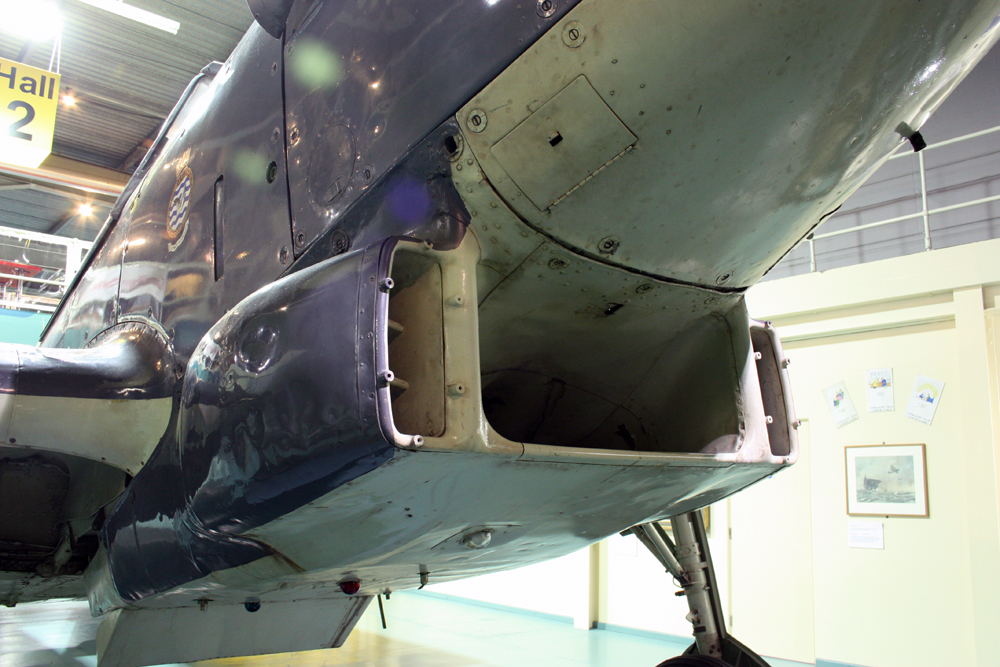
The more I researched this, the more confused it became. The following is my attempt to solve the conundrum with primary and secondary sources.
As a sample of the latter, H.A. Taylor’s Fairey Aircraft Since 1915 (Putnam, 1974 – hereafter, Taylor) states that all the N4XXX serial block were Mk I, indicated by Fairey documentation, and first Mk II was actually the 251st aircraft, X8525. As noted above, Sturtivant identifies the first Mk II as N4017 but then seems to contradict this by identifying later aircraft as being converted to Mk II status. David Brown’s Fairey Fulmar Mks I & II (Profile Publications, 1973, hereafter, Brown) gives the first Mk II as N4021 and states that all subsequent aircraft were Mk IIs, but then suggests that the starting point was actually N4060. Other published sources, where they identify the beginning of Mk II production, tend to repeat one of the above versions.
I am fortunate in having complete copies of the logbooks of Fairey test pilot Duncan Menzies, who, with his deputies Sam Moseley and Albert Eyskens, did the vast majority of the development and production test flying on the Fulmar for Fairey. Menzies made the first flight of a Fulmar, and was almost killed testing N4043 on 2 February 1941 when it broke up during a terminal velocity dive.
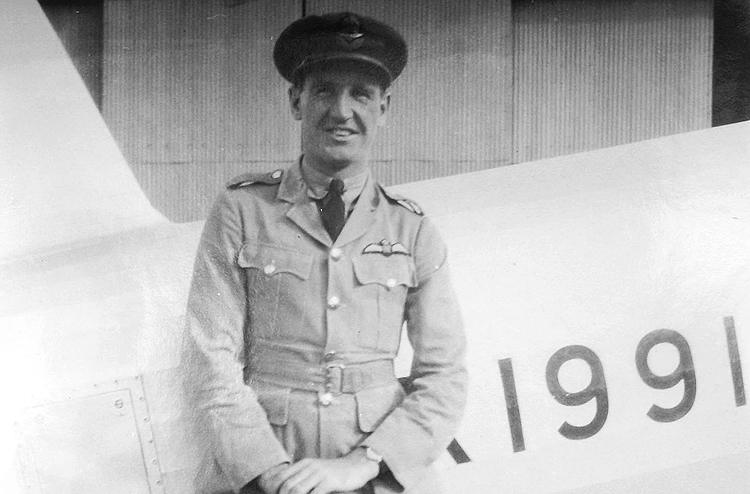
Unfortunately, Menzies’ log books do not generally indicate mark of Fulmars, but they do provide some useful context. He had flown up to N4079 at the time of his crash in N4043 on 2 February 1941, and flew N4021 – the so-called Mk II prototype – on its initial flight on 20 December 1940. Unfortunately, the period when Menzies was out of action coincided with the introduction of the Mk II.
His first flight following his return from convalescence on 11 May 1941 was the initial flight of X8545, the 21st aircraft from that serial block. The only time ‘Fulmar II’ is specified around this period is for a test flight of X8564 on 1 June.
Menzies’ log books do show some changes to engine, propeller and control surfaces tested from late 1940 that may indicate preparation for a change of mark. For example, N1859 ‘radiator suitability trials’ 5 November, N1859 ‘radiator suitability’ 10 Nov, N1859 ‘Radiator suitability’ 13 Nov, N4011 ‘Constant speed unit adjusted’ 15 Dec, N4016 ‘airscrew changed. Hydraulics’ 11 Jan, and then the testing of mass-balanced elevators and rudder February 1–2 – according to Menzies these were to address the appearance of instability arising from a change of propeller to one with greater pitch. The change of propeller is sometimes also associated with the change to Mk II status but this does not seem to be born out from photographs.
The second production machine, N1855, was flown to Rolls Royce, Hucknall, for cooling tests with Merlin XXX and fuel system on 4 February 1941, two days after Menzies’ crash. It force-landed en route and became temporarily unserviceable. The new radiator returned to Faireys, Stockport and was fitted to N4021 instead. Sturtivant has N4021 converted to Mk II on 20 Jan 1941, but this seems unlikely if it was indeed used as a replacement for N1855. Brown states the first flight of N4021 as 20 January, so it seems likely that either in primary or secondary sources, the date of 20 December has been mistakenly recorded as January. Certainly, Menzies did not fly N4021 after its initial flight in December, and it seems reasonable to conclude that had it been converted much before 2 February, he would have done. At any rate, N4021 went to the A&AEE for Mk II performance trials on 4 May after the cooling system was deemed suitable by R-R.
The first X-serial Fulmar, the first aircraft unequivocally delivered as a Mk II, was declared ready on 19 April 1941. The type biography for the Fulmar (AVIA 46/141) is sadly of little help, merely noting in May 1941 that the Mk II was now in production but not giving a precise start date.
At this point it is tempting to accept Taylor’s assertion that “Some records say that N4017-N4147 (including ‘blackout’ blocks) were Mk IIs, but Fairey records say these were all Mk Is with Merlin VIII engines.” However, Admiralty records suggest otherwise. A report from Commanding Officer, HMS Ark Royal on Operation ‘Splice’ (ADM 199/657), which took place in the western Mediterranean on 21 May 1941, notes that 807 Squadron was equipped with Fulmar IIs, and there was at least one other Mk II on board used as the reserve aircraft for escorting Hurricanes to Malta. These aircraft had arrived via HMS Furious, which left the UK on 5 March. Exactly one month later, ten Fulmar IIs of 807 Squadron transferred to Ark Royal, replacing 800 Squadron with its Blackburn Skuas – too early to be aircraft from the X8525-X8817 block, the first of which would not be delivered to the FAA for another few days.
This would seem to preclude the first Mk IIs being aircraft from the 250th onwards. Among the aircraft identified as with 807 Squadron was N4066, delivered to the squadron at Yeovilton in January, while further aircraft recorded as allocated to this unit include N4004 and N4006. The latter was definitely among the aircraft that left aboard Furious on 5 March, as it force-landed at Dakar 27 Mar 41 after getting lost on return from a recce. These were, according to most if not all sources, delivered as Mk Is.
It seems therefore that there are several possibilities
- Primary documentation identifying 807 Squadron’s Fulmars as Mk IIs is incorrect,
- At least some of the squadron’s aircraft were converted from Mk I to Mk II status before they embarked on Furious in March,
- Mk IIs were actually delivered from the beginning of the N4XXX serial block (and possibly mixed with Mk Is for a period).
Of these the third seems least likely, and no credible sources indicate the introduction of Mk IIs before N4017, although it cannot be ruled out 100%. The fact that N4021 and N4040 are listed as having been converted to Mk II – the former as prototype – however, strongly indicates that the production line was still producing Mk Is at this point.
This would seem to lead to two possibilities:
- Some Fulmars from the series N4041–N4147 were delivered as Mk IIs, or;
- Mk IIs started on the production line at X8525 but earlier aircraft were converted, either at Faireys or at RN Maintenance Units and Air Yards.
The fact that Mk Is could be converted to Mk IIs makes it very difficult to identify the earliest Mk II Fulmar in service, or the first Fulmar that came off the production line as a Mk II. Brown states that after the conversion of N4021, “Fairey’s Stockport factory was able to start production immediately by converting standard Fulmar I airframes on the line,” and adds “The lowest numbered ‘Fulmar I/II’ known to have joined a front-line unit during the first quarter of 1941 was N4028. It was allocated to 804 Squadron on March 10 and it is fairly certain that all aircraft from N4060 onwards were completed with the Merlin 30.”
This brings us, messily, full-circle, with no questions authoritatively answered…
 Naval Air History